
-2.png)
Most people don’t think twice about the sentences they write. But when you’re building a message designed to last—whether in a book, an article, or a keynote—you must understand structure. You must understand compound sentences.
At Trivium Writing, we teach structure not as a technical chore, but as a means to clarity and persuasion. One essential structure every serious communicator must master is the compound sentence.
A compound sentence is a sentence that consists of at least two independent clauses joined by a coordinating conjunction or a semicolon. These are not throwaway sentences. They're the backbone of balanced, thoughtful writing.
For example, “I wanted to go for a walk, but it started to rain" is a compound sentence. It joins two independent clauses—each one complete on its own—into a single sentence that carries contrast and rhythm. It is not just grammar; it's rhetorical strategy.
If your writing lacks sophistication, chances are your sentences are either too short or too tangled. Forming compound sentences bridges that gap. You take two ideas of equal importance and connect them without forcing them into one clause or fragmenting them into simple sentences.
Table of Contents
- Understanding Independent Clauses
- Coordinating Conjunctions
- Forming Compound Sentences
- Examples of Compound Sentences
- The Role of Commas in Compound Sentences
- Examples of Compound Sentences in Everyday Language
- Common Mistakes with Compound Sentences
- The Use of Semicolons
Understanding Independent Clauses
Before you can form compound sentences, you must master their raw materials: the independent clause.
An independent clause is more than a string of words—it’s a self-sufficient unit of meaning. It contains a subject and a verb, and it expresses a complete thought. If you were to strip your writing down to its bones, these would be the bricks you’re working with.
Take this sentence: “She leads a global team.”
That’s not just a sentence; it’s an independent clause. It has its own subject ("she") and verb ("leads") and requires no external support to make sense. It stands on its own—and so should every idea you express clearly.
This is where most writers go wrong. They try to connect clauses without understanding if those clauses can stand alone. That’s how you get run-on sentences, comma splices, and fragmented thoughts. They’re not just grammar errors; they’re signals that the writer hasn’t yet grasped structure.
At Trivium Writing, we don’t just hand you definitions. We show you how they support your message. In our Architecture of Writing, the Writing Equation connects independent clauses with your thesis to ensure your writing fulfills its purpose.

Mastering the independent clause gives you control. You stop guessing where a period goes. You stop fearing punctuation. And you start building sentences, complete sentences, that carry weight and intention.
The Importance of Independent Clauses
When clients come to me struggling to make their writing flow, I often find the issue is structural. They aren’t working with independent clauses; they’re wrestling with fragments, half-thoughts, and vague connections. But if your sentence lacks a clear subject, a strong verb, and a complete thought, you’re not building—it’s more like patching drywall without studs underneath.
In the world of professional writing, especially in nonfiction and thought leadership, every independent clause is a statement of clarity. It says, “I know what I mean, and I’m willing to say it fully.”
This is where compound sentences come to life. When you connect two independent clauses, you don’t just elongate your writing; you elevate it. You introduce nuance. You juxtapose ideas. You communicate contrast, reinforce logic, or show progression. That’s how readers stay engaged—not through clever words, but through structural coherence.
For example: “She launched her startup, and he focused on building the backend.”
Two independent clauses, one compound sentence, and a story emerges.
Don’t underestimate this: the more clearly you understand how independent clauses function, the easier it becomes to form compound sentences that express related ideas with equal importance—no fluff, no ambiguity, just impact.
Coordinating Conjunctions
If independent clauses are the bricks of your sentence structure, coordinating conjunctions are the mortar. These small words carry big responsibility: they connect two independent clauses into a compound sentence that flows with clarity and precision.
There are seven coordinating conjunctions in English:
For, And, Nor, But, Or, Yet, So
(FANBOYS, if you like mnemonics—but we don’t rely on tricks at Trivium; we prefer mastery.)
Each of these conjunctions signals a different type of relationship between two ideas:
-
Use and to add.
-
Use but to contrast.
-
Use so to show cause and effect.
-
Use yet to introduce tension or contradiction.
-
Use or to offer choice.
-
Use nor to extend a negation.
-
Use for to explain reason.
For example:
“I had no experience, but I knew I could learn.”
Two independent clauses joined by but. It’s not just grammar—it’s strategy. That sentence doesn’t just state facts; it builds momentum.
In the Architecture of Writing, these conjunctions help you refine your Angle—they show how each idea relates to the next, and they keep your reader anchored in your thought process.
Too many writers underestimate these small words. But when you’re building long-form thought leadership or nonfiction, they become vital tools. They clarify logic. They signal transitions. And they allow you to turn two simple sentences into one compound sentence that carries layered meaning.
Without the right conjunction, your sentence fragments. With the wrong one, your logic breaks down. But when used correctly, coordinating conjunctions give your sentences rhythm, clarity, and punch.
Forming Compound Sentences
When I work with clients—especially nonfiction authors or thought leaders—I see the same pattern: their ideas are strong, but their sentences fall flat. Why? They string together half-developed points, or worse, chop their thoughts into simple sentences that don’t connect.
The fix? Form compound sentences with precision and purpose.
A compound sentence consists of at least two independent clauses. Each clause must be able to stand alone. When you connect them, you create a single sentence that flows, persuades, and reflects equal importance between two ideas.
To form a compound sentence, follow three rules:
-
Identify two complete thoughts—that means each clause has its own subject and verb and forms a complete sentence.
-
Choose a coordinating conjunction (or, when appropriate, a semicolon or conjunctive adverb) to show the relationship between them.
-
Use proper punctuation—place a comma before the conjunction, or use a semicolon when not using a conjunction.
Example: “He wanted to scale his business, but he lacked a clear message.”
Each clause is self-sufficient. The coordinating conjunction "but" joins them, and the comma makes the separation clean and readable.
At Trivium Writing, this isn’t just grammar—it’s part of the Technical Elements of Writing we teach through our framework. You’re not writing to pass an English test; you’re writing to clarify your thinking and influence your audience.
The ability to form compound sentences is what allows you to take related sentences, connect them seamlessly, and guide your reader through your logic without confusion or clutter.
And when you do it well, your writing stops sounding academic or robotic. It starts sounding authoritative.
Examples of Compound Sentences
Clients often ask, “How do I know if I’ve written a compound sentence?” My answer: check if your sentence connects two independent clauses that express related ideas, and if the punctuation and conjunctions are doing their job.
Let’s look at a few real-world compound sentence examples—each one pairing two simple sentences into a single sentence with more clarity and depth:
-
“I wanted to go to the park, but it started raining.”
-
“She loves to swim, and he enjoys hiking.”
-
“We can go to the movies, or we can stay home and watch a film.”
In each example, you’re dealing with two clauses, each with its own subject and verb, joined by a coordinating conjunction. That’s not just a stylistic choice; it’s a way to signal relationships between ideas: contrast, addition, choice.
And it’s worth noting: compound doesn’t mean complicated. These are complete sentences, clean and direct. But they pack more punch than fragmented or loosely joined thoughts.
When you work with us at Trivium Writing, we teach this not as a grammar rule—but as a rhetorical tool. These structures form part of the External Architecture we build into your work: they reflect your voice, tone, and clarity of thought.
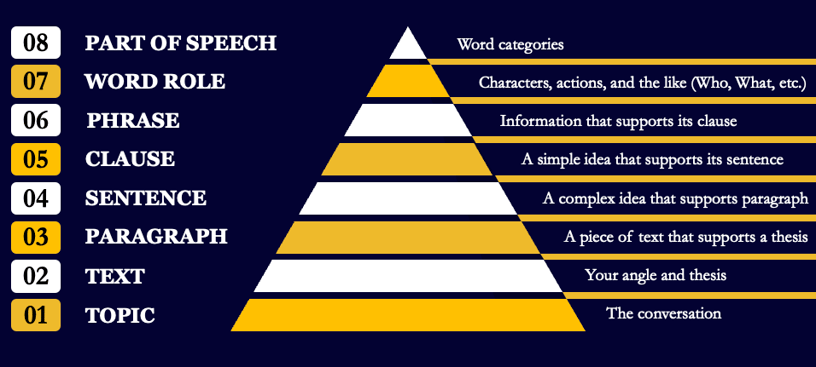
You’re not writing to impress. You’re writing to connect, to persuade, and to lead your reader through your logic—one clear sentence at a time.
The Role of Commas in Compound Sentences
Let’s be clear: punctuation isn’t decoration—it’s strategy. When you form compound sentences, the comma plays a structural role. It signals a pause between two independent clauses and tells the reader, “Here comes another complete idea.”

The rule is simple: when you use a coordinating conjunction to join two independent clauses, place a comma before the conjunction.
Example: “He likes apples, and she likes oranges.”
Each clause could stand alone, but the comma before and ensures your sentence doesn’t become a blur. Without it, you risk confusing your reader—or worse, committing a run-on sentence.
At Trivium, we believe punctuation supports your credibility. It tells the reader you’re not guessing; you know exactly how your message is built.
There’s nuance, too. When the two clauses are short, the comma becomes optional:
-
“I came and I saw.”
But this works only when the sentence’s rhythm remains clear without the pause.
In longer, more complex sentences, omitting the comma is not only incorrect; it’s distracting. It breaks the flow. It forces your reader to pause where they shouldn’t.
So use commas not because grammar books tell you to, but because they help you guide attention, manage pace, and maintain clarity in sentences built from two or more clauses.
Creating Compound Sentences
When I help a client develop their voice, especially nonfiction authors or business professionals, what we’re often doing is refining structure. And a core part of that refinement is creating compound sentences that clarify ideas and elevate tone.
The process is straightforward, but the impact is significant. Here’s how to create compound sentences with intention:
1. Identify Independent Clauses
First, make sure each idea you want to connect is a complete sentence on its own. That means it has a subject, a verb, and it forms a complete thought. Without that, you’re not creating a compound sentence—you’re heading toward a fragment or run-on.
Here are a few examples:
“His strategy worked.”
“He attracted the right clients.”
These are independent clauses. You can’t connect them until they stand on their own.
2. Choose the Right Coordinating Conjunction
Use one of the seven coordinating conjunctions—for, and, nor, but, or, yet, so—to show the relationship between the two main clauses. This is about logic and rhythm. Don’t guess—be deliberate.
3. Use Proper Punctuation
If you’re using a conjunction, place a comma before it. If you’re skipping the conjunction, use a semicolon—but only if the clauses are closely related.
Example with comma and conjunction:
“She wrote the proposal, and the client accepted it.”
Example with semicolon:
“She wrote the proposal; the client accepted it.”
At Trivium Writing, this is part of our Writing Equation—an internal logic that connects purpose, structure, and clarity. We don’t teach rules in isolation; we show you how sentence structure serves your message.
Because once you know how to create compound sentences intentionally, you unlock a new level of control over your writing. You stop improvising. You start composing.
Forming Compound Sentences with Complex Ideas
Once you’ve mastered basic compound sentences, the next step is to bring in more depth—because your ideas don’t live in isolation. When your thoughts span multiple layers, and you need to show both connection and complexity, it’s time to work with compound-complex sentences.
A compound-complex sentence includes at least two independent clauses and at least one dependent clause. This structure allows you to combine similar ideas, signal contrast, and include context or conditions in a single, coherent message.
For example:
“Although she was tired, she went for a run, and he stayed home to rest.”
Here’s the breakdown:
-
“Although she was tired” = dependent clause
-
“she went for a run” = independent clause
-
“he stayed home to rest” = second independent clause
This isn’t just grammar—it’s strategic communication. You’re balancing cause, action, and contrast—all in one sentence. That’s the power of compound-complex sentences.
In our Architecture of Writing, this is where you move from clarity to depth. You’re not just conveying facts; you’re weaving ideas together with nuance and precision.
But clarity still comes first. You cannot form compound sentences with complex ideas unless you understand what each clause contributes. You must be able to identify the dependent clause, and ensure every main clause is strong enough to stand on its own.
This structure isn’t just for advanced writers—it’s for anyone with layered insights, especially thought leaders writing persuasive nonfiction. It lets you say more without rambling, and it positions you as someone who can hold complexity without confusion.
Compound Complex Sentence Examples
If you want your writing to feel rich but still clean, compound complex sentences are essential. These structures allow you to convey multiple ideas with layered meaning—without losing the reader.
Let’s break down some compound complex sentence examples so you can see exactly how they function in practice:
-
“Although she was tired, she went for a run, and he stayed home to rest.”
-
“Although she was tired” = dependent clause
-
“she went for a run” = independent clause
-
“he stayed home to rest” = independent clause
This sentence sets the context, shows two actions, and contrasts two decisions—all in one unified structure.
-
“I wanted to play outside, but it started raining, so I stayed in and read a book.”
-
“I wanted to play outside” = independent clause
-
“it started raining” = independent clause
-
“so I stayed in and read a book” = independent clause
(“so” shows cause-effect progression across three ideas)
-
“Because the client asked for revisions, I updated the proposal, and the designer reworked the mockup.”
-
“Because the client asked for revisions” = dependent clause
-
“I updated the proposal” = independent clause
-
“the designer reworked the mockup” = independent clause
These are not just longer sentences—they are tighter sentences. They consolidate multiple ideas, show relationships clearly, and prevent the choppiness that comes from using too many simple sentences in a row.
The Difference Between Compound and Complex Sentences
One of the biggest breakthroughs my clients experience is understanding why a sentence works—not just that it works. And that clarity often starts with recognizing the difference between compound and complex sentences.
Here’s the core distinction:
-
A compound sentence contains two or more independent clauses. Each clause is a complete sentence, and they’re joined by a coordinating conjunction (or sometimes a semicolon).
-
A complex sentence contains one independent clause and at least one dependent clause—a group of words that cannot stand alone.
Let’s look at both:
Compound:
“I wanted to write a book, but I didn’t know where to start.”
Two independent clauses—both could function on their own, joined by “but.”
Complex:
“Although I wanted to write a book, I didn’t know where to start.”
The clause “Although I wanted to write a book” is a dependent clause. It gives context, but it can’t stand alone.
The key phrase here is complete thought. Independent clauses are self-sufficient. Dependent clauses rely on something else—they’re like a bridge without an anchor unless tied to a main idea.
At Trivium, we teach this distinction as part of the Architecture of Grammar. When you're choosing between compound and complex sentences, you’re not just applying grammar; you’re choosing how your ideas relate to one another.
If both clauses are equally important: use a compound sentence.
If one clause exists to explain, condition, or clarify the other: use a complex sentence.
This subtle choice signals maturity in your writing. You’re not guessing. You’re orchestrating.
Understanding Dependent Clauses
To write with clarity, you need to know when a sentence stands on its own—and when it leans on something else. That’s where the dependent clause comes in.
A dependent clause—also called a subordinate clause—contains a subject and verb, but it does not express a complete thought. It can’t stand alone as a full sentence. It’s dependent by design. It needs an independent clause to anchor it.
Take this example:
“Although it was raining”
It has a subject ("it") and a verb ("was raining")—but it’s incomplete. If you stop here, your reader is left hanging. That’s because the subordinating word “although” signals that something else is coming.
Complete the sentence:
“Although it was raining, I decided to go for a walk.”
Now you have a complex sentence—one independent clause, one dependent clause, and a clear relationship between two ideas.
Dependent clauses often begin with subordinating conjunctions, such as:
-
although
-
because
-
since
-
if
-
while
-
unless
Each word introduces a condition, cause, contrast, or time. And each one must be paired with a main clause to complete the thought.
At Trivium Writing, we emphasize this not just as grammar—but as thinking. Your sentences reflect your logic. If your clause structure is off, your message falls apart. But when you match a dependent clause with a strong main clause, you’re communicating both context and intent.
That’s part of your Writing Equation: the internal logic that allows your ideas to land with impact.
If you want to move from functional writing to strategic writing, you must understand the anatomy of your sentences. And that begins with knowing what can stand alone—and what can’t.
Tips for Writing Compound Sentences
Writing strong compound sentences isn’t just about knowing the rules—it’s about using structure to serve your message. When I coach authors, especially nonfiction professionals, I often find that their ideas are powerful but buried beneath weak structure or unclear flow. That’s why creating compound sentences with care is essential.
Here are a few tips to help you write them effectively:
1. Keep It Concise
When you form compound sentences, avoid cramming in too many ideas. If you’re connecting more than two clauses, make sure each one contributes to the whole. Short sentences can be powerful, but run-on sentences kill momentum. Be ruthless with clarity.
2. Vary Your Sentence Structure
Don’t write ten compound sentences in a row. Use them to add rhythm to your writing. Mix them with simple sentences and complex sentences to create contrast and maintain reader engagement. Structure should breathe—not suffocate.
3. Maintain Parallel Structure
When you join two clauses in a compound sentence, keep the grammar parallel. If the first clause starts with an action verb, make sure the second does too. This keeps the sentence balanced and easier to read.
Example (parallel):
“She manages the team, and he oversees client relations.”
Not parallel:
“She manages the team, and client relations are overseen by him.”
4. Choose the Right Conjunction
Each of the seven coordinating conjunctions carries a different meaning. Don’t just default to “and.” Use “but” for contrast, “so” for consequence, “or” for choice. Be precise. These words are your logical glue.
5. Use a Comma Before the Conjunction
This is non-negotiable. If you’re joining two independent clauses, you need that comma before the coordinating conjunction. Without it, your sentence structure falls apart.
At Trivium, this approach is part of our Technical Elements of Writing—where clarity meets control. Our clients don’t just learn rules; they learn to write sentences that drive ideas forward with intent.
When you follow these tips, you stop guessing and start crafting. And that shift alone changes everything in your writing.
Examples of Compound Sentences in Everyday Language
When people think of compound sentences, they often picture academic writing or grammar drills. But these structures aren’t just technical—they’re natural. You already use compound sentences in everyday conversation, and that’s exactly why they belong in your writing.
Here are a few examples of compound sentences that sound like something you’d say without even thinking:
-
“I enjoy cooking, but my sister prefers baking.”
-
“We went to the beach, and we had a wonderful time.”
-
“You can call me, or you can send an email.”
Each one combines two simple sentences—each with its own subject and verb—into a single sentence that flows. These examples are clear, conversational, and balanced. They reflect equal importance between ideas, a key quality of strong compound structure.
At Trivium Writing, we remind clients that writing isn’t about sounding impressive; it’s about sounding intentional. The same principles you use in spoken language apply in writing. The difference? In writing, structure becomes visible.
The choices you make either serve your reader or confuse them.
So don’t overthink it. If your sentence includes two ideas that are closely related, and both can stand on their own, it’s often an opportunity to use a compound sentence. You’ll sound more natural, more coherent, and more credible.
This is how structure becomes invisible support—what we call External Architecture. You’re not showing off the scaffolding. You’re building something that holds together without falling apart.
Common Mistakes with Compound Sentences
Even intelligent writers—experts, consultants, thought leaders—make basic errors when they don’t fully understand sentence structure. And when it comes to compound sentences, there are a few predictable pitfalls I see over and over.
1. Run-On Sentences
A run-on sentence occurs when two independent clauses are joined without proper punctuation or conjunctions.
Incorrect:
“I like to read I also enjoy writing.”
There’s no punctuation or coordinating conjunction to separate the two complete sentences.
Correct:
“I like to read, and I also enjoy writing.”
or
“I like to read; I also enjoy writing.”
This is why we emphasize internal sentence logic in our client work. Every idea must be self-contained before it can be combined.
2. Comma Splices
A comma splice happens when two independent clauses are joined only by a comma—with no conjunction.
Incorrect:
“I love cooking, I hate cleaning.”
Correct:
“I love cooking, but I hate cleaning.”
or
“I love cooking; I hate cleaning.”
Remember: the comma alone isn’t enough. You need a coordinating conjunction or a semicolon to connect two main clauses.
3. Misidentifying Clauses
Some writers confuse dependent clauses with independent ones, resulting in fragmented sentences. You can’t form compound sentences unless both parts can stand alone.
Incorrect:
“Because he was tired, but he went to the meeting.”
This is grammatically broken; it mixes a dependent clause with a conjunction that expects two full ideas.
Correct:
“Although he was tired, he went to the meeting.”
or
“He was tired, but he went to the meeting.”
At Trivium, we help clients avoid these errors by embedding them in our Technical Elements of Writing phase. We don’t let weak joins or sloppy logic undermine strong ideas.
Getting this right isn’t just about grammar. It’s about credibility. Because if your structure is sloppy, your reader will assume your thinking is sloppy, too.
The Use of Semicolons
For most writers, the semicolon is a mystery. For strong communicators, it’s a tool—a precise way to connect two independent clauses without relying on a coordinating conjunction.
A semicolon joins two complete sentences that are closely related in meaning. It signals continuity without the need for words like and, but, or so.
Example:
“I love traveling; it broadens my perspective.”
Both clauses are independent—each has a subject and a verb, and each could stand alone as a sentence. But together, they form a smoother, more sophisticated rhythm.
The semicolon does two things at once:
-
It keeps the reader moving—no full stop.
-
It signals a logical connection—without adding unnecessary conjunctions.
At Trivium Writing, we encourage semicolons for writers who want tighter transitions and cleaner flow. When used well, they elevate your writing above the level of simple sentences strung together.
But here’s the rule: don’t force it. Only use a semicolon when:
-
You’re joining two main clauses, and
-
The ideas are so closely related that a period would feel abrupt.
If your clauses aren’t tightly linked, split them with a period instead. Structure only works when it serves your message.
Semicolons are part of the Technical Elements we help clients master, especially when writing high-level thought leadership, white papers, or editorial content. Done right, they add control. Done wrong, they add confusion.
Use them deliberately, and your sentences will show the same confidence you bring to the rest of your work.
How to Identify Compound Sentences
One of the first skills I teach my clients—especially those writing books or building thought leadership—is how to identify compound sentences in their own writing. Because when you can spot structure, you can shape it. And when you shape structure, you gain control over your message.
So how do you recognize a compound sentence?
Start by checking three key elements:
-
At least two independent clauses. Each clause must include a subject and a verb and must express a complete thought. If either part is incomplete, it’s not a compound sentence.
-
Joined by a coordinating conjunction or semicolon. Look for words like and, but, or, so, for, nor, yet—these are the classic coordinating conjunctions. If a conjunction isn’t used, a semicolon should be.
-
Proper punctuation. If you’re using a coordinating conjunction to join the clauses, place a comma before the conjunction. This isn’t optional—it’s what separates correct compound sentences from comma splices.
Here’s an example:
“I missed the deadline, but I submitted the report the next day.”
The first clause is: “I missed the deadline.”
The second clause is: “I submitted the report the next day.”
Each is a complete sentence. Together—with a comma and the coordinating conjunction but—they form a proper compound sentence.
Now compare that with a simple sentence:
“I missed the deadline.”
Or a complex sentence:
“Although I missed the deadline, I submitted the report the next day.”
In that case, you have a dependent clause paired with an independent clause—so it’s not compound.
At Trivium, we train clients to see sentences not as lines of words, but as architectural structures. When you can identify a sentence’s foundation, you can build with intention, not guesswork.
This level of awareness leads to tighter editing, stronger arguments, and writing that actually holds up under pressure. That’s what structure does—it supports your ideas.
Benefits of Using Compound Sentences
When you master compound sentences, your writing stops sounding fragmented or simplistic—and starts sounding thoughtful, connected, and persuasive. This isn’t about complexity for its own sake. It’s about structure that serves your message.
There are three core benefits to using compound sentences with precision:
1. Improved Flow
When you combine two independent clauses into one sentence, you eliminate unnecessary breaks. Your ideas move forward naturally, and the transitions feel seamless. This makes your writing more engaging and easier to follow—especially when dealing with related ideas.
2. Clarity of Ideas
A well-formed compound sentence shows the relationship between two thoughts—whether it’s contrast, cause, addition, or choice. That connection helps readers interpret your message correctly. It also keeps your thinking visible, which builds trust.
Example:
“She wanted to speak at the event, but she missed the deadline.”
This isn’t just two sentences; it’s one idea, clearly structured around tension.
3. Variety in Sentence Structure
Nothing dulls writing faster than repetition. A page full of simple sentences reads like a list. By using compound sentences, you add rhythm and complexity without sacrificing clarity. This is especially important in long-form writing, where sentence structure carries tone.
At Trivium Writing, we focus on this in both the Technical Elements and the External Architecture of writing. You don’t just want to sound competent—you want to sound deliberate. That starts with structure.
Strong sentence construction is not a mechanical skill—it’s a communication strategy. When you write compound sentences with intention, your readers don’t just understand your ideas—they follow your reasoning, and they feel your authority.
When to Use Compound Sentences
Knowing how to write compound sentences is important—but knowing when to use them is what makes the difference between competent writing and powerful communication.
Here’s when you should consider using a compound sentence:
When you’re expressing related ideas
If you have two independent clauses that belong together logically—because they contrast, support, or expand on each other—don’t split them into separate sentences. Connect them with a coordinating conjunction or a semicolon.
Example:
“I wanted to accept the offer, but the terms didn’t align with my values.”
The contrast adds tension, and the sentence flows as one cohesive thought.
When you want to improve flow
Too many short sentences in a row make your writing sound robotic. Well-placed compound sentences provide rhythm and variation. They give your writing a more natural cadence—one that mimics the way we think and speak.
When you want to show balance
If two ideas carry equal importance, using a compound sentence emphasizes that balance. You’re saying: these thoughts deserve to stand together, side by side.
Example:
“She led the strategy, and he executed the operations.”
Neither clause is subordinate. Both are vital.
This structural choice supports your tone and intent. At Trivium Writing, we help clients align sentence construction with message strategy. That’s part of what we call the Internal Architecture—the invisible logic that shapes how your writing is received.
So don’t default to short or disconnected statements. Use compound sentences when you need to connect two ideas, give them equal weight, and move your reader forward without pause.
Done well, structure fades and meaning comes through.
Understanding Compound Sentences Further
To write with impact, you can’t just apply grammar; you have to understand the logic behind structure.
That’s why we revisit the core of the compound sentence: it’s not just a sentence with more words. It’s a sentence built from two or more independent clauses that are deliberately joined to express a complete and layered idea.
Let’s break this down further.
A compound sentence requires:
-
At least two independent clauses
-
A coordinating conjunction or semicolon to connect them
-
Proper punctuation to signal the relationship between the ideas
Here’s why that matters: In professional writing, we’re not just trying to sound correct. We’re trying to build narrative flow, logical progression, and reader engagement. Every sentence must serve your broader message. When you join two complete thoughts, you’re giving readers context and contrast all in one place.
Example:
“I enjoy reading, and I find nonfiction especially rewarding.”
Both clauses stand on their own, but together they reveal depth: a general habit followed by a specific preference.
At Trivium Writing, we focus on structure at the Foundational and Technical levels. We teach clients to use sentences not just as grammatical units, but as tools for clarity, persuasion, and rhythm.
When you understand how compound sentences work, you stop writing like you’re filling space. You start writing with architectural control—connecting ideas, building contrast, and managing pace.
That’s the difference between a writer who hopes to be understood and a writer who engineers understanding.
The Importance of Proper Punctuation
Punctuation isn’t decoration; it’s structure. When forming compound sentences, punctuation tells your reader how to read your thoughts. Without it, your message collapses into confusion, no matter how strong your ideas are.
Let’s revisit the rule that matters most: When you join two independent clauses with a coordinating conjunction, place a comma before the conjunction.
Example:
“He loves to swim, and his brother prefers running.”
This comma isn’t optional. It marks the boundary between two complete clauses. Without it, the sentence becomes harder to parse—and your reader has to do extra work to understand your meaning.
At Trivium Writing, we emphasize this as part of the Technical Elements of Writing. Clients often come to us with brilliant content wrapped in broken structures. When we clean up the punctuation, their authority immediately becomes visible.
Here’s where nuance enters: When both independent clauses are very short, some style guides allow you to omit the comma.
Example:
“I came and I saw.”
Technically correct. But stylistically? It can feel abrupt. In nonfiction writing, especially business or thought leadership, clarity always wins. Default to the comma unless rhythm calls for omission.
Punctuation is a subtle tool, but it governs the reader’s experience. In a world full of rushed writing and careless editing, proper punctuation signals something rare: a writer who respects their reader’s time and attention.
Use it with intention.
Exploring Two Independent Clauses
The heart of every compound sentence is this: two independent clauses, each capable of standing on its own, joined with purpose.
An independent clause is not just a random thought; it’s a complete sentence, one that contains both a subject and a verb, and expresses a complete idea. When you put two of them together, you’re not simply extending a sentence. You’re building a bridge between two equal ideas.
Example:
“The sun set, and the stars appeared.”
Each part—“The sun set” and “the stars appeared”—is self-sufficient. But combined with a coordinating conjunction and comma, they carry a narrative rhythm. This is the kind of structure that allows your writing to move forward with clarity and grace.
You can also go further. A compound sentence isn’t limited to two clauses—you can link more than two independent clauses, as long as each one is clear, properly punctuated, and logically connected.
Example:
“I wanted to go for a walk, but it started to rain, and I decided to stay inside.”
That’s three main clauses, each adding a layer. The sentence grows in complexity, but the structure keeps it grounded.
At Trivium Writing, this kind of clarity is the result of applying our Writing Equation and Internal Architecture. When you understand the weight and function of each clause, you begin to write with control—not just style.
So ask yourself as you revise:
-
Does each clause stand alone?
-
Do they relate with equal importance?
-
Is the connection meaningful and logical?
If the answer is yes, you’re not just writing sentences. You’re building thought.
The Role of Coordinating Conjunctions
Coordinating conjunctions are the connective tissue of compound sentences. They don’t just link words—they link ideas of equal weight. When you’re combining two independent clauses, choosing the right conjunction is what gives your sentence logic and shape.
There are only seven of them, but they carry the full range of relationships you’ll use in professional writing:
-
For – shows reason
-
And – adds information
-
Nor – joins two negatives
-
But – shows contrast
-
Or – presents alternatives
-
Yet – signals contradiction or unexpected contrast
-
So – indicates consequence or result
Example:
“I wanted to attend the workshop, but I had a client meeting.”
Here, but introduces contrast. You’re not just stacking sentences; you’re framing tension between two decisions.
These words are small, but their function is powerful. Each coordinating conjunction reveals how two independent clauses are related. And at Trivium Writing, we teach clients to see these as strategic choices—not filler words.
This is part of the Technical Elements and Internal Architecture we guide clients through. We don’t settle for surface-level clarity. We dive into how your sentences mirror your reasoning.
The best writing isn’t just correct; it’s coherent. And coherence starts with the right joints. When you use coordinating conjunctions with precision, you stop writing reactively. You start constructing arguments that are logical, persuasive, and easy to follow.
So don’t guess. Choose the word that reflects your logic.
Distinguishing Between Compound and Complex Sentences
If you're serious about writing with clarity, you need to know the difference between a compound sentence and a complex sentence. This distinction affects how your ideas are received—and how much trust your reader places in your thinking.
A compound sentence contains two or more independent clauses. These are complete thoughts—each one could stand on its own as a sentence. They are typically joined by a coordinating conjunction or a semicolon.
Example (compound):
“She submitted the proposal, and the team approved it.”
Each clause has a subject, a verb, and a complete idea.
A complex sentence, by contrast, includes one independent clause and at least one dependent clause. The dependent clause cannot stand on its own. It adds context, background, or conditions, but it leans on the main clause to make sense.
Example (complex):
“Although she submitted the proposal, the team asked for revisions.”
“Although she submitted the proposal” is a dependent clause—it sets the stage, but doesn’t finish the thought.
Here’s the rule:
-
If your sentence has two or more complete ideas, use a compound sentence.
-
If one idea depends on the other to be understood, use a complex sentence.
At Trivium Writing, we make this a foundational concept in both our Architecture of Grammar and Writing Equation. The sentence structure you choose signals your thinking structure.
Understanding this distinction sharpens your editing, improves your flow, and gives your audience confidence that you know exactly what you’re saying—and how to say it.
Common Mistakes to Avoid
While learning to form compound sentences, it is crucial to be aware of common pitfalls. One frequent mistake is creating comma splices, which occur when two independent clauses are joined with only a comma, without a coordinating conjunction. This error can lead to confusion for readers.
For example, "I like pizza, I could eat it every day" is a comma splice. The correct version would be "I like pizza, and I could eat it every day."
Another mistake to watch out for is run-on sentences. These happen when independent clauses are not punctuated correctly, making it difficult for readers to understand the intended meaning.
Using punctuation properly and selecting appropriate conjunctions can help avoid these issues.
Tips for Crafting Compound Sentences
If you want your writing to carry weight, you need more than good ideas—you need structure that holds. That’s where compound sentences come in. When crafted well, they give your writing rhythm, logic, and depth. But without precision, they become clutter.
Here are five tips we teach our clients at Trivium Writing for crafting strong, intentional compound sentences:
1. Be Concise
Just because you can combine two or more independent clauses doesn’t mean you should. Avoid dragging out your point. Keep each clause focused and to the point. Brevity adds power.
Weak:
“I was going to write the article, and I thought about doing it yesterday, but I had other priorities, and now I’m behind.”
Stronger:
“I planned to write the article, but other priorities delayed me.”
2. Use Parallel Structure
When linking clauses, match their grammatical form. If one clause starts with a verb, the other should too. This keeps your sentence balanced and easy to read.
Example:
“She manages projects, and he builds the systems.”
Not: “She manages projects, and the systems are built by him.”
3. Choose Your Conjunctions with Intention
Each coordinating conjunction serves a different purpose. Don’t rely on “and” for everything. Use “but” for contrast, “so” for cause and effect, “or” for alternatives, and “yet” to add tension.
Ask yourself: What’s the relationship between these two ideas? Then choose accordingly.
4. Punctuate with Precision
Place a comma before the coordinating conjunction when joining two independent clauses. If you’re not using a conjunction, use a semicolon. Every join must be intentional and clean.
5. Don’t Overdo It
Too many compound sentences in a row can make your writing feel bloated. Mix with simple and complex sentences to vary rhythm. Structure should support your message, not distract from it.
This is where sentence construction meets your Writing Equation—each sentence serves a purpose, builds a progression, and moves the reader toward your larger idea.
Structure isn’t about rules. It’s about results.
Advanced Uses of Compound Sentences
Once you understand the mechanics of compound sentences, you can start using them with greater flexibility and style. At this stage, structure becomes a tool—not a limit. You stop writing for correctness and start writing for impact.
Here’s how advanced writers—especially authors, consultants, and leaders—use compound sentences strategically:
1. Create Narrative Rhythm
In long-form writing, pacing matters. A string of simple sentences feels abrupt. A wall of complex sentences can feel dense. But well-placed compound sentences give your reader space to breathe while maintaining continuity.
Example:
“The campaign was successful, and the response exceeded expectations.”
This pairing keeps the momentum going without exhausting the reader.
2. Build Tension and Contrast
When you want to show opposing actions or ideas of equal importance, compound sentences allow you to place them side by side. The reader sees the friction—and that friction is often where your point lands.
Example:
“She warned the client, but they moved forward anyway.”
The structure carries the tension.
3. Deepen Persuasion
In persuasive writing, you often need to give a position and a consequence. A compound sentence connects those ideas tightly—without diluting your argument.
Example:
“We must take action, or we will face long-term consequences.”
This isn’t just a sentence. It’s a choice placed directly in the reader’s hands.
At Trivium Writing, this kind of structure is what we embed in a client’s External Architecture. It’s not about using grammar for grammar’s sake. It’s about shaping thought in ways that resonate, persuade, and guide.
Structure becomes invisible—but its effects are undeniable.
Conclusion
Writing isn’t about stringing words together—it’s about constructing meaning. And few tools are more valuable in that process than the compound sentence.
When you learn to join two independent clauses with clarity and control, you stop writing reactively. You start orchestrating your ideas. You bring rhythm to your message. You give equal weight to important thoughts. You eliminate clutter without oversimplifying. And most of all, you communicate with intent.
At Trivium Writing, we don’t teach grammar in isolation. We build writing around a framework—The Architecture of Writing—that helps our clients write not just correctly, but strategically. The ability to form compound sentences, use coordinating conjunctions, and manage complete sentences with proper punctuation is part of that foundation.
Whether you’re crafting a book, a keynote, or a message that carries your voice to thousands, mastering sentence structure gives you control over your ideas—and the confidence to express them with precision.
So the next time you write, don’t just think in paragraphs. Think in structure. Start by identifying your clauses. Then connect them with intention. Use the right conjunction. And punctuate for clarity.
That’s how good writing becomes great.
Ready to write with more clarity and impact?
Book a free consultation with Trivium Writing and discover how our framework can help you turn ideas into influence—one sentence at a time.

Article by Leandre Larouche
Leandre Larouche is a writer, coach, and the founder of Trivium Writing.

-2.png?width=352&name=SERVICES%20IMAGES%20(12)-2.png)
.png?width=352&name=SERVICES%20IMAGES%20(39).png)
.png?width=352&name=SERVICES%20IMAGES%20(40).png)