
.png)
Strong writing doesn't start with sentences. It starts with phrases.
When I coach clients — entrepreneurs, professionals, and thought leaders — through the process of writing their books, one of the first things I help them see is that writing is not about stringing individual words together. It’s about combining small groups of words to convey clear, focused meaning. These small groups, called phrases, are the quiet powerhouses of language.
Whether you're crafting a complete sentence or refining just a part of one, your ability to control phrases determines the quality of your expression. It’s not an exaggeration to say that understanding how phrases function is one of the most transformational shifts any writer can make — regardless of background or experience.
At Trivium Writing, we’ve worked with more than 130 clients across industries and continents. Most of them didn’t come to us as professional writers. What they had was a message — an insight, a story, or a perspective worth sharing. Our job was to give them the tools to express that message with clarity and confidence. One of those tools is a deep understanding of how phrases shape grammar and guide meaning.
This post will walk you through the types of phrases in English grammar — from noun phrases and verb phrases to infinitive, gerund, and participle phrases. Along the way, I will show you how these constructions operate under the surface of great writing. More than definitions and examples, you’ll learn to think structurally — to see not just the words, but the architecture behind them.
Table of Contents
- What Are Phrases?
- Noun Phrase
- Verb Phrase
- Prepositional Phrases
- Adverbial Phrases
- Adjective Phrases
- Infinitive Phrases
- Gerund Phrases
- Participle Phrases
- Appositive Phrases
- Adjectival Phrase
- Common Phrases
- Conclusion
What Are Phrases?
A phrase is not just a collection of words — it's a unit of meaning. In grammar, a phrase is a small group of words that work together as a single part of speech. It doesn’t express a complete thought the way a clause does because it lacks both a subject and a predicate. Yet its role is critical.
In the Architecture of Writing framework, we call this internal structure: the invisible scaffolding that shapes your sentences from the inside out.

Here’s a working definition worth remembering:
A phrase is a group of words that functions as one unit within a sentence. It can act as a noun, verb, adjective, adverb, or prepositional element — but it does not contain both a subject and a verb.
Many new writers focus on individual words, trying to make each one perfect. But impactful writing comes from understanding how words form into phrases, and how those phrases form the backbone of your complete sentence.
Consider these examples:
-
Noun Phrase: The bright red car
-
Verb Phrase: is running swiftly
-
Prepositional Phrase: on the table
These aren’t just strings of words. Each one acts as a single part of speech: a subject, a predicate, or a modifier. They’re more than descriptive — they’re functional.
Understanding phrases means understanding the tools of your craft. Every sentence you write is built from phrases, not just single words. Learning how to construct and manipulate these elements gives you control — not only over the grammar but over the clarity and power of your ideas.
Most people write in reaction to their thoughts. Professional writers — the kind we coach at Trivium — write with intention and design. They see the function of each phrase, and they use them strategically to enhance meaning, sharpen structure, and guide the reader’s experience.
In the next sections, we’ll explore each type of phrase in depth — with definitions, examples, and practical insights. Whether you’re writing a blog, a business book, or a thought leadership piece, mastering these phrases will change how you write — and how others read you.
Phrases are essential because they help to form the building blocks of our sentences, adding detail and depth to our writing. Now, let's dive into the different types of phrases and their functions.
Noun Phrase
When clients come to us unsure how to structure their sentences, it’s often because they don’t understand what a noun phrase is — or how powerful it can be.
A noun phrase is a group of words that functions as a noun. It usually includes a noun (the core) and any words that modify or clarify that noun — such as determiners, adjectives, or prepositional phrases.
Let’s start with the basics:
A noun phrase = a noun + its modifiers
Some examples:
-
Simple Noun Phrase: The dog
-
Complex Noun Phrase: The small, brown dog with a red collar
The function of a noun phrase depends on its position in the sentence. It might act as the subject, the object, or the complement. Understanding this helps you build sentences that are both grammatically correct and rhetorically effective.
Let’s look at two practical applications:
-
As Subject: The small, brown dog with a red collar barked loudly.
-
As Object: She saw the small, brown dog with a red collar.
Notice what’s happening. These aren’t just decorative descriptions. These noun phrases are pulling weight — carrying specificity, creating imagery, and grounding the reader in detail.
At Trivium, we teach writers to think in units, not just in words. When you master noun phrases, you move from generic writing to precise articulation. You’re not writing about a dog — you’re writing about the small, brown dog with a red collar. That specificity builds credibility, interest, and impact.
Clients often ask whether their writing needs to be complex to be effective. The answer is no, but it needs to be clear and intentional. Even a short noun phrase like a book becomes more engaging when it grows into the ancient, leather-bound book on the dusty shelf.
If you’re writing to persuade, inform, or inspire, your noun phrases are your anchors. They give your sentences substance — and your readers something to hold on to.
Verb Phrase
If noun phrases give your writing substance, verb phrases give it motion.
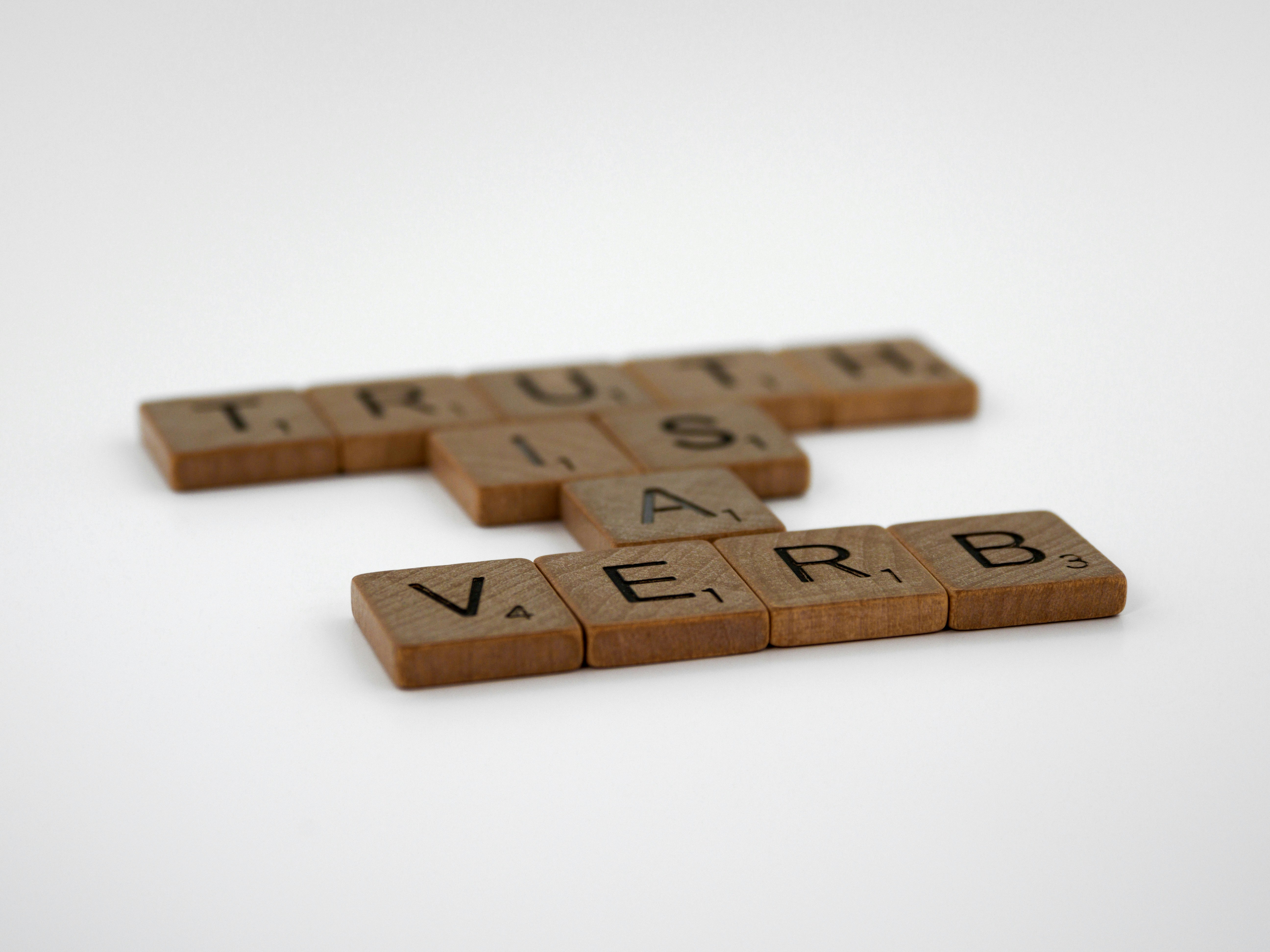
A verb phrase is a group of words built around a main verb and sometimes one or more helping verbs — also known as auxiliary verbs. While the noun phrase tells us who or what, the verb phrase tells us what’s happening, when, and sometimes how or under what condition.
Here’s the core idea:
A verb phrase = main verb + auxiliary verb(s) + modifiers (if needed)
Examples:
-
Simple Verb Phrase: is sleeping
-
Complex Verb Phrase: will have been sleeping
Notice the difference: is sleeping expresses present continuous action. Will have been sleeping places the action in the future, extended over time. That’s not just grammar — that’s nuance.
In my work with clients, especially nonfiction authors, verb phrases often become the lever we use to adjust tone, perspective, and tense. One verb phrase can shift your narrative from static to dynamic, from vague to sharp.
Let’s look at how verb phrases function in different contexts:
-
Tense: She will have been sleeping for hours by then.
-
Aspect: He is sleeping.
-
Mood or Modality: You should have told me earlier.
These are not just words you toss into a sentence. They’re tools that shape the emotional and rhetorical contour of your ideas.
A common mistake I see is writers defaulting to weak or passive constructions — not because they don’t know better, but because they don’t recognize the verb phrase as a unit of power. Learning how to control that power is part of building your internal architecture as a writer.
Here’s another example:
-
She has been running every morning.
This verb phrase doesn’t just say she runs. It tells us about her consistency, her timeline, and her habits — all in a handful of words. That’s economy. That’s clarity. That’s what we teach at Trivium.
Mastering verb phrases is not about memorizing rules. It’s about recognizing that every verb phrase carries action, time, and intent. The more you practice, the more intentional your phrasing becomes — and the stronger your message lands.
Prepositional Phrases
If noun phrases anchor your message and verb phrases move it forward, prepositional phrases provide the context.
A prepositional phrase begins with a preposition and ends with the object of that preposition — often a noun or pronoun — along with any accompanying modifiers. This group of words doesn’t stand alone; it supports. It clarifies where, when, how, or why something happens.
Here’s the core formula:
A prepositional phrase = preposition + modifiers + object
Examples:
-
Simple Prepositional Phrase: in the park
-
Complex Prepositional Phrase: under the old, rusty bridge
These may seem like small details, but details are the difference between generic and compelling writing. One phrase can turn She sat into She sat under the old, rusty bridge, evoking atmosphere, time, even emotion — all with just a part of the sentence.
In practice, prepositional phrases serve two key functions:
-
As Adjectives: The book on the table is mine.
-
As Adverbs: She sat under the old, rusty bridge.
At Trivium Writing, we coach writers to use structure to enhance meaning — not just to satisfy grammar checkers. Prepositional phrases are especially useful when you want to ground abstract ideas in concrete imagery.
They answer questions like:
-
Where? → by the window
-
When? → after the meeting
-
How? → with precision
-
Why? → because of the delay
Writers often underestimate the power of these small groups of words. But in a sentence, the difference between They arrived and They arrived after the storm is the difference between vague and vivid.
When used well, prepositional phrases add richness without clutter. They support the main verb, enrich the noun, and allow your reader to visualize the moment. In a well-structured sentence, they never feel like fluff — they feel like frame.
As we move forward, you’ll see how these elements work in combination. For now, remember: phrasing is where your ideas become tangible. And prepositional phrases are your bridge between action and environment.
Adverbial Phrase
In strong writing, how, when, where, and why aren’t questions; they’re opportunities. And that’s where adverbial phrases come in.
An adverbial phrase is a group of words that acts as an adverb. It modifies a verb, adjective, or another adverb, adding precision to how the action or quality unfolds. This isn’t about sounding academic — it’s about controlling your meaning.
Definition to keep in mind:
An adverbial phrase = a phrase that tells us how, when, where, or why an action occurs.
Examples:
-
How: She spoke with great care
-
When: He will arrive in a few minutes
-
Where: They met at the train station
-
Why: She left early to avoid traffic
I often tell my clients that the difference between vague and vivid writing lies in modification. You don’t just run; you run with purpose. You decide in a moment of doubt. These adverbial phrases sharpen the scene, enrich the pacing, and add dimension.
Let’s be clear: this is not decorative language. It’s functional phrasing, part of the architecture of a sentence. When you know how to wield an adverbial phrase, you write with more control and create stronger emotional and logical impact.
You can place adverbial phrases at the beginning, middle, or end of a sentence depending on emphasis and rhythm:
-
Beginning: With great reluctance, he signed the contract.
-
Middle: She, after much consideration, declined the offer.
-
End: He delivered the message with urgency.
These placements are not random. They’re tools. And this is why phrasing matters: you don’t just write to inform; you write to influence.
When we guide clients through The Architecture of Writing, we teach them to think not only in words or clauses, but in phrasing units that deliver purpose. An adverbial phrase is one of those units — one that clarifies intent and sculpts tone.
Adjective Phrase
When your goal is precision — not just expression — you need to master adjective phrases.
An adjective phrase is a group of words that describes or qualifies a noun or pronoun. It answers the classic questions: Which one? What kind? How many? But instead of doing so with single words, it uses carefully structured phrases that add clarity and nuance.
An adjective phrase = a phrase that functions as an adjective, modifying a noun or pronoun.
Examples:
-
Simple: very happy
-
Complex: extremely happy with the results
In our coaching sessions at Trivium, we often see early drafts filled with individual words or flat descriptions. And that’s understandable; most people aren’t taught to think in phrasing layers. But once you shift from isolated adjectives to structured adjective phrases, your writing deepens — without getting longer.
Consider:
-
The athlete → The extremely tired athlete
-
The book → The book full of mysteries and hidden truths
What changed? Not the subject. The phrasing. That’s the power of internal architecture — the ability to build detail and emphasis directly into the sentence without losing flow.
Adjective phrases can be placed before or after the noun:
-
Before: The student excited about her results gave a speech.
-
After: The student, excited about her results, gave a speech.
Both versions work. The difference lies in tone, rhythm, and emphasis — and we teach our clients how to choose the right version based on the message and audience.
If you’re writing a business book, a personal memoir, or thought leadership content, the adjective phrase becomes your tool for controlled elaboration. You avoid fluff by focusing on function. You replace filler with detail. And that’s how your writing commands attention without shouting.
Infinitive Phrase
When your writing needs to express intention, reason, or purpose, the infinitive phrase is your most efficient tool.
An infinitive phrase starts with the word to followed by the base form of a verb, and may include objects or modifiers. It’s one of the most flexible structures in English grammar because it can function as a noun, adjective, or adverb — depending on where and how it appears in a sentence.
An infinitive phrase = to + base verb + modifiers/objects
Examples:
-
Simple: to write
-
Expanded: to write a clear and compelling message
-
Purposeful: to write with clarity and impact
In client sessions, we use infinitive phrases to strengthen thesis statements, develop calls to action, and clarify why a character or subject behaves a certain way. One phrase can change the function of a sentence — from static to strategic.
Here’s how these phrases function across roles:
-
As a Noun: To write well takes discipline.
-
As an Adjective: She had a book to write.
-
As an Adverb: He paused to reflect.
This versatility makes infinitive phrases essential to persuasive, educational, and strategic writing — the kind of writing we specialize in at Trivium. Whether you're helping your audience understand, believe, or act, you need phrasing that aligns with intentional communication.
Let’s look at application in context:
-
Purpose: He trained daily to qualify for the tournament.
-
Reason: She left early to avoid traffic.
-
Result: They spoke up to make a difference.
When you see an infinitive phrase, you’re not just looking at a group of words — you’re seeing motivation crystallized in structure. That’s why we emphasize this construction when guiding authors through The Architecture of Writing. Purpose is not something you imply. It’s something you build into every sentence.
Want to write with greater purpose? Learn to use infinitive phrases with precision.
Gerund Phrase
When action becomes the subject, you’re dealing with a gerund phrase — one of the most misunderstood yet powerful tools in English grammar.
A gerund phrase starts with a gerund — the -ing form of a verb — and functions as a noun. Like other phrases, it can include modifiers and objects, but its job is always the same: to act as a thing, not an action. You’re not describing movement; you’re naming it.
A gerund phrase = gerund + modifiers/objects
Function = always noun
Examples:
-
Simple: Running
-
Expanded: Running every morning
-
Full Phrase: Running every morning before sunrise
In the books we help clients write — whether they’re about business, health, leadership, or personal growth — we often use gerund phrases to create clear topics, defined ideas, and strong openings. These phrases allow abstract or dynamic ideas to take grammatical form.
Let’s look at how they function:
-
As Subject: Running every morning is beneficial.
-
As Object: She enjoys running every morning.
-
As Complement: His passion is running every morning.
These aren’t throwaway phrases. They’re structured thoughts — complete enough to function as key parts of a sentence. If your writing often feels vague or thin, learning to control gerund phrases will immediately add weight and clarity to your content.
One of the strategies we teach in The Architecture of Writing is to name your ideas before you explain them. Gerund phrases help you do that. Instead of writing She found meaning in what she did every day, write Finding meaning in her daily work became her mission. It’s tighter. Sharper. More precise.
This shift matters. Especially when you’re trying to express values, principles, or habits, gerund phrases let you articulate abstract concepts as concrete nouns — and that’s where persuasion begins.
Participle Phrase
When description needs movement — not just appearance — participle phrases step in.
A participle phrase begins with a participle, a verb form functioning as an adjective, and includes any modifiers or complements. These phrases describe nouns by injecting action into the description. You’re not just telling us what something is — you’re showing us what it’s doing or experiencing.
A participle phrase consists of:
participle + modifiers or complements
Function: acts as an adjective
Examples:
-
Smiling brightly
-
Smiling brightly at the joke
-
The girl, smiling brightly at the joke, waved at her friend.
In client manuscripts, I often see static descriptions such as “The man was tired.” But when we revise through the lens of The Architecture of Writing, we get something more alive and cinematic: “Exhausted from the hike, the man collapsed on the bench.” The participle phrase adds texture and tone — without adding clutter.
Participle phrases can appear at the beginning, middle, or end of a sentence:
-
Walking through the crowd, she kept her eyes low.
-
The man, drenched in sweat, reached for his water bottle.
-
She sat by the window, lost in thought.
Each placement alters rhythm and emphasis — choices we routinely optimize in client manuscripts.
One essential rule to remember: participle phrases describe nouns, not verbs. Writers sometimes confuse them with gerund phrases or misuse them entirely, leading to dangling modifiers. For example:
Incorrect: Running quickly, the finish line appeared in the distance.
Correct: Running quickly, she spotted the finish line in the distance.
In the incorrect version, the finish line appears to be running. In the correct one, we’ve restored clarity by identifying who is taking the action.
That’s the kind of precision we prioritize at Trivium Writing. Clarity isn’t cosmetic — it’s structural. And participle phrases offer a reliable way to build description that’s active, intentional, and vivid.
Appositive Phrase
When your goal is clarity, sometimes the best move is to rename.
An appositive phrase is a group of words that renames or further identifies a noun or pronoun. It sits beside the noun it clarifies, usually separated by commas if it’s not essential to the meaning of the sentence. This isn’t just grammar trivia — it’s one of the most effective tools for adding precision and authority to your writing.
Here's a definition:
An appositive phrase = a noun or noun phrase that renames or clarifies another noun
Function: acts as a renaming structure for precision and emphasis
Examples:
-
A talented musician
-
A talented musician, known for his jazz compositions
-
My friend, a talented musician, will perform tonight.
At Trivium Writing, we often use appositive phrases to help clients assert credibility, introduce roles, or contextualize expertise without writing additional sentences. One well-placed phrase can elevate your message and remove ambiguity — especially in nonfiction or business writing, where clarity builds trust.
Let’s look at how this plays out:
-
The novel, a thrilling mystery, was captivating.
-
My brother, the doctor, will join us for dinner.
Each appositive phrase delivers extra information without disrupting the flow. It adds meaning, not bulk. And when your goal is to inform or persuade, that balance is essential.
There are two types of appositive phrases:
-
Non-Essential Appositive Phrase: Adds detail, but the sentence still makes sense without it.
The CEO, a veteran entrepreneur, announced the plan. -
Essential Appositive Phrase: Provides necessary information to identify the noun.
The poet Sylvia Plath left a lasting legacy.

In The Architecture of Writing, we emphasize controlled elaboration. You don’t expand for the sake of it. You expand with purpose — to clarify, to identify, or to reframe. The appositive phrase is perfect for this because it gives you a structured way to add detail without adding confusion.
When done right, appositive phrases create elegance in your syntax. They act like parentheses, but with more weight and more rhythm.
Adjectival Phrase
If adjectives describe what something is, adjectival phrases tell us what kind, which one, or how many — with clarity and depth.
An adjectival phrase is a group of words that functions like a single adjective. It modifies a noun or pronoun, often providing more detail than a lone adjective could. These phrases typically appear either right before or right after the noun they describe.
Here's a definition:
An adjectival phrase = a phrase that modifies a noun or pronoun
Function: acts as an adjective
Examples:
-
Full of excitement
-
Full of excitement and joy
-
The story, full of excitement and joy, kept us on edge.

Writers often rely on great, strong, and interesting individual words to describe. But those words fall short. They’re vague and overused. What you want instead is phrasing that delivers concrete, layered, and relevant description. That’s what adjectival phrases allow you to do.
Let’s break down placement and function:
-
Before the noun: The extremely tired athlete struggled to finish.
-
After the noun: The athlete, extremely tired, struggled to finish.
In both cases, the phrase offers specific context. And in both cases, the sentence gains in tone, rhythm, and imagery — all without being wordy.
At Trivium Writing, we coach clients to use these phrases to make ideas visible. The Architecture of Writing teaches that clear communication isn’t about short sentences but rather about the right details in the right places. A strong adjectival phrase lets you describe accurately without sounding inflated or redundant.
Compare:
-
She told an emotional story.
-
She told a story full of grief, redemption, and hard-earned peace.
One is vague and easily forgotten. The other is rooted in meaning — and that’s what readers remember.
Common Phrases
Some expressions carry more than grammar; they carry culture, emotion, and immediacy. These are common phrases: familiar combinations of words that convey recognizable meaning beyond the sum of their parts.
A common phrase is not a technical grammatical term, but in practice, it refers to well-known groups of words that are used to express specific ideas or feelings. They often come from idioms, expressions, or colloquialisms — and they work because they tap into shared understanding.
Examples:
-
Under the weather – feeling ill
-
Break the ice – start a conversation
-
In the nick of time – just before it’s too late
-
By the book – following rules exactly
These are more than stylistic shortcuts. When used carefully, common phrases can bring rhythm, tone, and relatability to your writing. They create immediate connection with the reader by referencing something familiar — a shared image or situation.
But at Trivium Writing, we teach our clients to be selective with these phrases. Used too frequently or without intention, they can dilute your message or make your writing sound clichéd. Used well, they anchor meaning, lighten tone, or emphasize key ideas without distracting from your voice.
Here’s how to make them work for you:
-
Use them to clarify, not to fill space.
-
Adapt them to suit your tone and audience.
-
Avoid stacking too many in a single sentence — clarity first.
-
If it feels like a placeholder, replace it with your own phrasing.
For example:
-
“He hit the nail on the head.” → Instead, say “He articulated the problem exactly.” — unless the tone calls for something more conversational.
Common phrases work best when they support your structure, not when they replace it. In The Architecture of Writing, we talk about building with intention. That applies here, too: if a phrase enhances meaning or tone, use it. If it masks vague thinking, revise it.
Writing is not about avoiding the familiar. It’s about using it strategically — to guide the reader and reinforce your voice.
Conclusion
Most people think of writing as stringing words into sentences. But powerful writing comes from a different mindset — one rooted in phrases, not individual words.
Whether you're crafting a thought leadership article, structuring a nonfiction book, or clarifying your brand’s message, your writing improves when you understand how phrases function. The moment you stop thinking in single words and start building with complete phrases, your message gains clarity, rhythm, and authority.
Over the years, working with more than 130 clients across industries and disciplines, I’ve seen the same transformation over and over again. Writers who once felt stuck or unsure of their voice begin to move with confidence — not because they’ve learned more vocabulary, but because they’ve mastered structure. They’ve learned to use noun phrases to anchor their ideas, verb phrases to create motion, and prepositional phrases to establish context. They’ve used adverbial, adjectival, infinitive, participle, gerund, and appositive phrases to shape tone, clarify meaning, and express complex thoughts with ease.
This is what we teach inside The Architecture of Writing — that clear communication is not talent, luck, or inspiration. It’s structure. It’s phrasing. It’s the deliberate choice to use the right building blocks, in the right sequence, to deliver the right message.
If you’re writing a book, building a brand, or shaping a message that matters, your first step is not to become a “better writer.” Your first step is to understand how language works under the surface — so that your ideas can stand on solid ground.
Master phrases, and you master control. Not just over grammar, but over your voice, your message, and your impact.
Now write — with clarity, with purpose, and with structure.
Happy writing!

Article by Leandre Larouche
Leandre Larouche is a writer, coach, and the founder of Trivium Writing.

-1.png?width=352&name=SERVICES%20IMAGES%20(13)-1.png)
-2.png?width=352&name=SERVICES%20IMAGES%20(10)-2.png)
-2.png?width=352&name=SERVICES%20IMAGES%20(11)-2.png)