
-1.png)
Over the past few years, I’ve helped over 130 clients write and publish professionally—many of whom didn’t consider themselves writers to begin with. And yet, they all had something powerful in common: a message worth sharing.
But before that message can reach readers with clarity and resonance, we must begin with the basics. And few concepts are more basic—or more misunderstood—than the subject of a sentence.
The subject is the anchor of sentence structure. It’s the noun, pronoun, or noun phrase that tells us who or what the sentence describes. Without it, you don’t have a sentence—you have a fragment pretending to be complete.
So when someone asks, “What is a subject in a sentence?” the answer is simple in theory, but layered in practice: it’s the person, place, thing, or idea the sentence is built around. It's the part that usually performs the action—though not always—and it plays a pivotal role in meaning, flow, and structure.
Table of Contents
- The Architecture Behind the Sentence
- Complete Subject vs. Simple Subject
- Types of Subjects in Sentences
- Subject-Verb Agreement
- Subjects with Direct and Indirect Objects
- Common Issues with Subjects
- Subject Complements
- Compound Subjects Explained
- Tips for Recognizing Subjects in Complex Sentence
- Conclusion
The Architecture Behind the Sentence
At Trivium Writing, we break down writing into layers using a framework called The Architecture of Writing. This framework helps clients navigate even the most complicated concepts in communication.
Understanding the subject of a sentence aligns with the External Architecture. This is how the sentence sounds and feels to the reader. A weak subject weakens the entire structure; a strong subject gives the sentence presence.
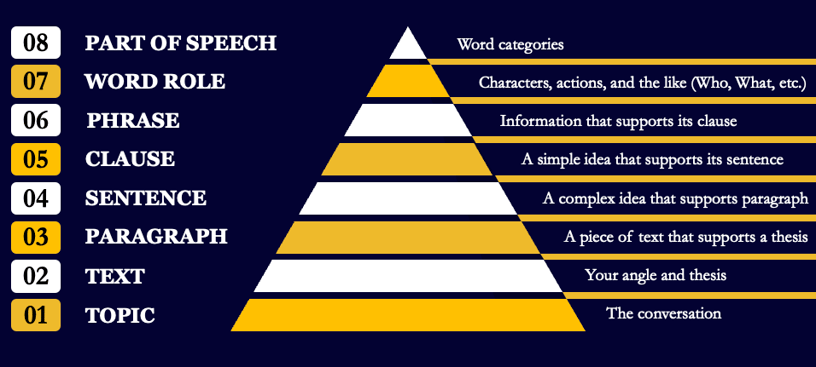
When we talk about “sentence structure” in the context of writing a thought-leading book, we’re not just talking about grammar; we’re talking about persuasion, credibility, and clarity.
Why This Matters to Non-Writers
Most of my clients aren’t professional writers. They’re professionals with insights, perspectives, and systems they want to communicate. Understanding the subject—and how it interacts with the verb and object—equips them to write with authority.
If your sentence lacks a clear subject, your message collapses. If your subject is ambiguous, readers stop trusting the rest of your paragraph. Writing, after all, is a contract of attention and understanding. The subject is the first clause in that contract.
Complete Subject vs. Simple Subject
When clients come to me saying their writing feels vague or cluttered, I often trace the issue back to a lack of sentence control. And sentence control starts with understanding the simple subject versus the complete subject.
The Simple Subject
The simple subject is the core noun or pronoun performing the action. It’s the single word that gives the sentence its backbone. Strip away all the modifying words, and what’s left is the essence.
Take this sentence: “The ambitious entrepreneur launched a new platform.” Here, entrepreneur is the simple subject. It’s the noun performing the action.
This distinction is critical when you’re refining the clarity and rhythm of your writing. If your simple subject isn’t clear, the sentence lacks force.
The Complete Subject
The complete subject includes the noun phrase—everything that tells us more about the subject. That means adjectives, articles, and even prepositional phrases that add detail.
From the earlier example, “The ambitious entrepreneur” is the complete subject.
This is where many writers get tangled. They pack too much into the complete subject, thinking more words equal more clarity. But unless you’re intentional, you lose the sharpness your sentence needs to cut through noise.
Why This Distinction Matters in Writing
When coaching clients through book projects, I often see compound subjects and bloated noun phrases dragging clarity down. They’ve written a sentence that looks polished, but when we ask “What is this sentence describing?”—they struggle to answer.
That’s the litmus test: If you can’t isolate the simple subject in your own sentence, neither can your reader.
Understanding this distinction also helps you maintain subject-verb agreement, especially when you're dealing with more than one subject or modifiers that distract from the core.
Pro Tip:
If your sentence feels heavy, find the main verb first, then ask: Who or what is performing the action? That answer is your simple subject. Everything else is optional. Powerful writing doesn’t rely on abundance—it relies on precision.
Types of Subjects in Sentences
When I review client manuscripts—whether memoirs, thought leadership books, or business frameworks—I often find that sentence structure breaks down because the subject isn't properly understood. Writers confuse modifiers with core elements, or they build compound subjects without attending to balance and clarity.
To master sentence construction, you need to understand the different types of subjects. These aren’t just grammar terms—they’re tools that shape meaning, voice, and flow.
1. Simple Subject
This is the single word that performs the verb’s action. It’s the starting point of most sentences and the first test of clarity.
Example:
“The cat sleeps.”
Here, cat is the simple subject. Nothing more is needed to identify what the sentence describes.
Simple subjects help you write with force. When you're building authority, whether in a book or an email, that simplicity keeps your message lean and effective.
2. Complete Subject
A complete subject includes the noun phrase: the simple subject plus all its modifying words: adjectives, articles, and sometimes prepositional phrases.
Example:
“The black cat on the windowsill sleeps.”
The complete subject is “The black cat on the windowsill.”
Why it matters: Readers interpret meaning from the first few words. A complete subject filled with vague or redundant modifiers weakens your authority. But when every word earns its place, the sentence lands with clarity.
3. Compound Subject
This is where more than one subject is doing the work. Compound subjects are joined by a conjunction—usually and or or—and they require special attention to subject-verb agreement.
Example:
“My sister and I enjoy reading.”
Both sister and I form the compound subject, and the verb must agree with the plural nature of the pair.
The trap here? Writers often treat compound subjects like a singular unit and mismatch the verb. Or worse—they insert a verb phrase that agrees with only one part of the subject.
In nonfiction, especially persuasive or instructional writing, that kind of error chips away at trust.
4. Subjects with Indirect and Direct Objects
Some sentences contain not just subjects, but indirect and direct objects. Understanding these relationships tightens your logic and flow.
Example:
“She gave her mother a gift.”
-
She is the subject (the one performing the action).
-
Her mother is the indirect object (the person receiving the gift).
-
A gift is the direct object (the thing being given).
This structure is crucial when you're explaining processes, systems, or interactions. Most sentences that describe who’s doing what for whom need this clarity.
5. Passive Constructions and Hidden Subjects
In passive voice, the subject isn’t always doing the action—it’s receiving it.
Example:
“The decision was made by the committee.”
The decision is the grammatical subject, but it’s not performing the action—it’s being acted upon.
Writers often default to passive voice out of habit or uncertainty. But it distances the subject from the verb and muddies responsibility. In leadership writing, passive voice can undermine authority unless used deliberately.
6. Noun Phrases as Subjects
A noun phrase adds richness and more detail to the subject, especially in complex sentences.
Example:
“The curious child with the muddy hands explored the garden.”
Here, “The curious child with the muddy hands” is the complete noun phrase serving as the subject.
Noun phrases, when used well, build vivid images. But overload them and you lose clarity. I coach clients to make sure every word in a noun phrase contributes to meaning, not just decoration.
Why It All Matters
In most sentences, clarity lives or dies at the subject level. Whether you're writing thought leadership content or guiding readers through a transformational idea, understanding how subjects, objects, and modifiers interact is foundational.
When your subjects are strong, your writing is strong. And that strength multiplies across chapters, pages, and paragraphs.
Subject-Verb Agreement
When you’re writing for impact—whether it’s a book, a report, or a public-facing article—clarity is currency. And nowhere does clarity collapse faster than in flawed subject-verb agreement.
This is one of those grammar rules that seems simple on the surface but quickly becomes slippery when modifying words, prepositional phrases, or compound subjects get involved. I’ve seen this mistake dozens of times in manuscripts from professionals who are experts in their field—but who never got clear on how verbs behave around different types of subjects.
Let’s fix that.
What Is Subject-Verb Agreement?
In plain terms: the verb in a sentence must agree in number with the subject. If the subject is singular, the verb must be singular. If the subject is plural, the verb must be plural.
Example:
-
“The dog barks.” (singular subject, singular verb)
-
“The dogs bark.” (plural subject, plural verb)
Simple, right? Until it’s not.
Where Writers Get Tripped Up
1. Modifying Phrases Distract From the Subject
Many writers confuse modifiers or prepositional phrases with the core subject. But these are just accessories—they don’t change the number of the subject.
Faulty Example:
“The group of students are excited.”
The subject here is group—which is singular—not students. So the correct version is:
“The group of students is excited.”
That’s why in coaching sessions, I always ask clients to isolate the simple subject before they commit to the verb.
2. Compound Subjects Create Complexity
When you have compound subjects—two or more nouns joined by and—you usually need a plural verb.
Example:
“My brother and I write every morning.”
But if the two subjects refer to one entity, then the verb stays singular.
Example:
“Peanut butter and jelly is my favorite sandwich.”
(You’re referring to a single dish, not two separate things.)
3. Indefinite Pronouns Confuse Agreement
Words like everyone, someone, and each feel plural, but they’re singular.
Example:
“Everyone is responsible.”
Not “Everyone are responsible.”
When writing instructional or persuasive content, this distinction is essential. You want to sound authoritative, not uncertain.
Subject-verb agreement doesn’t just keep the grammar police at bay; it preserves your authority. When readers encounter awkward constructions or mismatched verbs, they lose trust in your control over the sentence. And when trust falters, persuasion fails.
At Trivium Writing, we teach our clients to see the structure beneath the sentence. This is part of our Internal Architecture in which we dissect how meaning is built and how form supports clarity.
Strong writing begins with strong alignment. And in most cases, that means getting your subject and verb to walk in step—no matter how complicated the sentence becomes.
Subjects with Direct and Indirect Objects
In any complete sentence, we’re not just working with a subject and a verb; we’re often introducing objects that complete the idea. And this is where many writers, especially non-writers, begin to feel the structure buckle under pressure.
As a writing coach and editor, I’ve reviewed countless drafts where the subject is clear, the verb is solid, but the object is either missing, misplaced, or misunderstood. And when that happens, the sentence stops delivering meaning.
Let’s untangle it.
What Is a Direct Object?
A direct object is the noun or pronoun that receives the action of the verb. In most sentences, the subject does something, and the object is what’s being acted upon.
Example:
“She threw the ball.”
-
She is the subject.
-
Threw is the verb.
-
The ball is the direct object—it’s what was thrown.
This structure is the spine of most English sentences. When your sentence structure follows this form, your writing feels stable, deliberate, and easy to follow.
What Is an Indirect Object?
An indirect object tells us to whom or for whom the action is performed. It’s positioned between the verb and the direct object.
Example:
“She gave her children a lesson.”
-
She is the subject.
-
Gave is the verb.
-
Her children is the indirect object—the people receiving the lesson.
-
A lesson is the direct object—what was given.
In most sentences, the indirect object is a person, and the direct object is a thing. This distinction is especially important in nonfiction writing, where who receives what often matters more than how it's said.
Using Prepositional Phrases for Clarity
Sometimes, writers avoid the indirect object structure and instead use a prepositional phrase:
“She gave a lesson to her children.”
Same meaning, different construction.
But here’s the catch: if you clutter the sentence with too many prepositional phrases, you create confusion about what the sentence describes. That’s when I step in as a coach to help clients streamline the phrasing without losing nuance.
If you're writing a business book, a memoir, or a framework to teach your audience something new, this structure becomes non-negotiable. You’re often writing about people doing things for other people. And if you don’t control how subjects, verbs, and objects interact, the sentence loses clarity and power.
In other words, the subject performs, but the object reveals what’s at stake.
When I help clients map their ideas using The Architecture of Writing, we always pay attention to who’s acting, what they’re acting upon, and who benefits. That clarity builds logic. That logic builds trust.
Exploring Noun Phrases as Subjects
Most sentences don’t start with just one word; they begin with a noun phrase. And when writers misunderstand how noun phrases function, their sentences quickly become bloated, vague, or grammatically unstable.
At Trivium Writing, we coach professionals—most of whom aren’t trained writers—to see the mechanics behind meaning. A noun phrase is one of the most powerful tools in that system. It builds clarity, structure, and even tone—when used intentionally.
What Is a Noun Phrase?
A noun phrase is a group of words built around a noun that serves as the subject of the sentence. It includes the main noun, plus any modifiers, articles, or prepositional phrases that give more detail.
Example:
“The determined young mother with two children at her side stepped forward.”
-
The simple subject is mother.
-
The noun phrase—“The determined young mother with two children at her side”—is the complete subject.
This isn’t just a grammatical note—it’s a rhetorical decision. The subject of the sentence sets the tone and invites the reader into a perspective. When the noun phrase is well constructed, the reader sees who the sentence is about, what’s relevant, and why it matters.
The Power and the Risk of Noun Phrases
In nonfiction writing, noun phrases add richness. They show us the identity, role, or context of the subject. But the longer the phrase, the more discipline you need.
Here’s where writers often go wrong:
-
They stack too many modifiers.
-
They insert prepositional phrases without clarity.
-
They lose track of the main noun, and the verb suffers as a result.
Trouble finding the real subject? That’s a red flag. A noun phrase should describe with precision, not distract.
Noun Phrases in Book Writing
When we work with clients on manuscripts, we often slow down at the sentence level to ask:
“Who is this sentence about, and is it immediately clear?”
If the noun phrase creates confusion—or feels like two sentences rolled into one—we revise. It’s not just about grammar. It’s about reader focus.
In our Internal Architecture Framework, we connect sentence clarity to audience resonance. When the subject is unclear, the reader doesn’t know what to track—and disengagement begins.
Write With the Reader’s Eye in Mind
In most sentences, the noun phrase is the reader’s first impression. It introduces the person, thing, or concept the paragraph will orbit around.
That’s why I tell clients: Don’t just add modifying words to sound smart—build your subject to point, not decorate.
Common Issues with Subjects
If I had a dollar for every sentence I’ve restructured because of a subject problem, I’d have funded a second office.
In all seriousness, even smart, capable professionals—consultants, entrepreneurs, researchers—fall into the same traps. They’re often describing complicated ideas, but their sentence structure can't support the weight. The issue? It almost always starts with the subject.
Let’s walk through the most common problems I see in manuscripts, outlines, and drafts—and how we fix them using The Architecture of Writing.
1. The Passive Voice Disguises the Subject
In the passive voice, the subject no longer performs the action—it receives it. That switch often confuses readers and removes responsibility from the sentence.
Example:
“The report was submitted late.”
Who submitted it? The sentence doesn’t say.
Now compare:
“The assistant submitted the report late.”
That version uses the active voice, where the subject performs the verb. It’s clearer, more direct, and easier to track.
When coaching executives and consultants, I challenge them to own the subject. Passive constructions are easy to slip into—especially in corporate or academic settings—but they often make writing sound bureaucratic or evasive.
2. More Than One Subject, No Agreement
Compound subjects can enhance variety, but they require discipline. If you have more than one subject, your verb must still agree with the whole.
Example:
“The CEO and the board were aligned.”
Plural subject, plural verb. So far, so good.
But if the sentence were:
“The CEO, along with the board, were aligned.”
Now we have a problem. The core subject is The CEO—a singular noun—so the verb should be was aligned. The phrase “along with the board” is a modifier, not part of the compound subject.
This is the kind of mistake that breaks the logic of subject-verb agreement and causes readers to trip—even if they can’t always explain why.
3. Subjects Buried in Clauses
One of the most common complaints I hear from clients is this:
"My sentences feel too long or complicated.”
Nine times out of ten, the subject is buried inside a dependent clause or surrounded by modifying phrases that stretch the sentence without adding clarity.
Example:
“What the manager was trying to convey to the team during the meeting on Friday about the updated budget figures was unclear.”
By the time the reader gets to “was unclear”, they’ve forgotten what the sentence is even about.
This is where our Internal Architecture process comes in. We isolate the core idea, identify the main subject, and rebuild from there. Often, that means turning one long sentence into two sentences—a move that instantly increases clarity.
4. Pronoun Ambiguity
Starting a sentence with they, this, or it—without clarifying the reference—kills clarity. Especially when a paragraph contains multiple nouns.
Example:
“They said it wasn’t necessary.”
Who is “they”? What is “it”?
When I review drafts with clients, I circle vague pronouns and write a note:
“Give me a noun I can see.”
If you want your reader to stay with you, name the subject. Pronouns work when they follow clear references—not when they lead the paragraph.
5. Modifiers That Mislead
When modifying words or prepositional phrases are placed too far from the simple subject, the sentence loses focus.
Example:
“Running across the field, the fence caught her eye.”
Grammatically, it sounds like the fence was running.
These errors break trust with your reader. They’re small, but they signal that you haven’t taken control of your sentence structure.
Why We Coach This So Closely
Our coaching method doesn’t just improve grammar; it enhances authority. When a writer controls the subject, they control the perspective, logic, and tone. That’s why we teach structure not as academic theory but as a practical tool for influence.
If your subject is clear, your reader stays with you. If your subject is vague, confusing, or misplaced, your writing loses power—no matter how brilliant the idea behind it.
Subject Complements
Once the subject and verb are in place, some sentences still feel unfinished. That’s because they’re missing something critical: a subject complement—a word or phrase that renames or describes the subject after a linking verb.
In the work I do with clients, especially those writing books meant to build credibility or share life experiences, subject complements play a quiet but crucial role. They clarify identity, signal transformation, and complete meaning.
And most writers overlook them.
What Is a Subject Complement?
A subject complement comes after a linking verb like is, seems, feels, or becomes and either:
-
Renames the subject (this is called a predicate noun), or
-
Describes the subject (this is called a predicate adjective).
Example:
“She is a doctor.”
-
She is the subject.
-
Is is the linking verb.
-
A doctor is the subject complement—it renames she.
Here, the subject isn’t doing anything.
The verb doesn’t show action; it links the subject to more information.
Other Examples in Practice
Predicate Noun (Renames the Subject):
-
“My mother is the team leader.”
-
“This building was a school.”
Predicate Adjective (Describes the Subject):
-
“The strategy seems effective.”
-
“His tone was dismissive.”
These aren’t flashy sentences—but they’re foundational. And in nonfiction, where your goal is to explain, define, or position, subject complements help you write with force without needing complex syntax.
Why This Matters in Thought Leadership
If you’re writing about people, roles, concepts, or transformations, you need subject complements. They allow you to define what a subject becomes, what it represents, or how it appears in a given context.
For example:
-
“The first draft is just the beginning.” → A clarifying insight.
-
“This phase of the business is the turning point.” → A strategic definition.
Subject complements help writers build meaning without more action. Sometimes, your reader doesn’t need more doing—they need more being. And that’s what a complement does: it completes the thought.
Clients often mistake a subject complement for a direct object because both follow the verb. The test is simple:
-
If the verb is an action verb, what follows is likely an object.
-
If the verb is a linking verb, what follows is likely a complement.
At Trivium Writing, we train clients to see these structures at a glance. That fluency gives them freedom. Once you understand the roles—subject, verb, complement, object—you can rearrange the parts with confidence. You’re no longer second-guessing every sentence.
Compound Subjects Explained
Writing isn’t just about knowing words; it’s about knowing how to arrange them. One structure that often tests a writer’s discipline is the compound subject. It seems straightforward, but when misused, it derails sentence structure, creates verb confusion, and slows the reader down.
In my work, especially with clients writing persuasive nonfiction or memoirs, I often say this: If your sentence has more than one subject, your writing needs twice the clarity.
Let’s break it down.
What Is a Compound Subject?
A compound subject is when two or more nouns or pronouns share the same verb. They're usually joined by a coordinating conjunction like and, or, or nor.
Example:
“Tom and Jerry are friends.”
-
Tom and Jerry form a compound subject.
-
Are is the verb they both share.
In this case, the subject is plural—two people doing one thing together. So the verb must match in number.
Key Rule: Agreement Matters
The number of your verb depends on how your compound subject is structured.
-
If joined by and, the verb is usually plural.
“My sister and I enjoy reading.” -
If joined by or or nor, the verb agrees with the subject closer to it.
“Neither the CEO nor the employees were present.”
“Either the interns or the manager is responsible.”
This last rule throws a lot of writers off. In my coaching sessions, we often pause and test different subject-verb pairings aloud. When you say it out loud, the mistake becomes obvious.
Why Compound Subjects Create Problems
Most issues come from lack of control over complexity.
Writers add modifiers, insert prepositional phrases, and forget which noun the verb is supposed to match. They also make the mistake of treating compound subjects as single ideas, which leads to singular verbs in plural situations.
Incorrect:
“The founder and advisor has arrived.”
(Unless the founder and advisor are the same person, this is wrong.)
Correct:
“The founder and the advisor have arrived.”
This distinction is subtle—but it matters. Especially in business, leadership, or legal writing, it changes the meaning of the sentence.
The Role of Compound Subjects in Voice and Flow
When well managed, compound subjects add variety, balance, and rhythm to your writing. But when poorly handled, they create friction.
At Trivium Writing, we help clients refine sentences by identifying whether a compound subject is adding meaning—or just adding words. If the sentence is trying to do too much, we simplify.
Sometimes, the answer is to break the idea into two sentences. It’s not just about grammar—it’s about control.
Tips for Recognizing Subjects in Complex Sentences
When someone tells me they’re struggling to make their writing “flow,” I look at the sentence structure first. More often than not, the problem isn’t vocabulary or even grammar—it’s that the writer has trouble finding the subject in their own sentence.
And if you can’t find the subject, your reader definitely can’t.
This is especially true in complex sentences—ones with clauses, modifiers, prepositional phrases, and more than one idea packed into a single line. In those cases, recognizing the simple subject becomes an act of clarity and control.
Here’s how I help clients do it.
1. Identify the Main Verb First
The fastest way to find the subject is to locate the main verb. Once you’ve done that, ask:
“Who or what is performing the action?”
Example:
“After several revisions and long meetings, the team finally approved the proposal.”
-
Verb: approved
-
Who approved? → The team
That’s your subject.
Don’t get distracted by modifying words or prepositional phrases like “after several revisions” or “and long meetings.” Those add context, but they don’t change who’s doing the action.
2. Strip the Sentence to Its Core
When in doubt, reduce the sentence to its most basic parts.
Original:
“The senior manager of the international marketing department, along with two assistants, has been coordinating efforts since July.”
Core Structure:
“The senior manager has been coordinating.”
That’s your main subject and verb. Everything else can be added back in after you’ve confirmed the foundation is strong.
This stripping-down technique is part of what we teach in The Architecture of Writing—before we build complexity, we check for clarity at the core.
3. Watch for Embedded Clauses
Writers often hide subjects inside dependent clauses, especially when they’re trying to sound sophisticated. But that’s a trap. Embedded ideas shouldn’t confuse your main clause.
Example:
“What the consultant suggested during the session was helpful.”
Here, the entire phrase “What the consultant suggested during the session” is the subject.
It’s a noun clause—it functions as one thing.
This level of structure can work, but only if you know what you’re doing. When a client uses this kind of sentence, I always ask: Could you rephrase this more clearly with just one word or a short phrase?
If yes, we simplify.
4. Ask Better Questions
If you're not sure where the subject is, ask:
-
“Who or what is this sentence describing?”
-
“Who or what is performing the action?”
-
“What is the verb describing?”
These questions take the guesswork out of sentence analysis. They’re the same ones I use in real time when reviewing client manuscripts.
Why It Matters
Recognizing the subject in complex sentences gives you control over tone, meaning, and flow. And when you’re writing a book—especially one meant to establish authority—every sentence must carry its weight.
The more control you have over your subjects, the less editing you’ll need later. And the more confident your reader will feel following your ideas.
Conclusion
When people come to Trivium Writing, they don’t usually say, “I need help with subjects and predicates.” They say things like, “My ideas feel muddy,” or “I’m not sure my writing lands.” And what we often uncover is a fundamental disconnect from the most basic part of sentence structure: the subject.
That’s why I emphasize this topic with every client—regardless of experience level.
Mastering the subject of a sentence isn’t about checking off grammar rules. It’s about taking ownership of your message. Because if you can’t name who or what your sentence describes, how can you expect your reader to follow your logic?
Final Thought
If you want to elevate your writing, start where every sentence starts: the subject. Understand it. Control it. Build around it. That’s how you go from sounding uncertain to sounding like a trusted voice in your field.
And if you ever find yourself asking, “What is a subject in a sentence?”, now you’ll know the answer. Not just grammatically—but strategically.
Whether you’re working on a book, speech, or strategic document, we’ll show you exactly where your writing can improve—and how to make progress fast.


Article by Leandre Larouche
Leandre Larouche is a writer, coach, and the founder of Trivium Writing.

-2.png?width=352&name=SERVICES%20IMAGES%20(12)-2.png)
.png?width=352&name=SERVICES%20IMAGES%20(40).png)
-2.png?width=352&name=SERVICES%20IMAGES%20(11)-2.png)